Access Control for Multifamily: Credentials Residents Will Actually Use
The best access control system is the one residents do not have to think about, which is a harder design problem than it sounds.
September 3, 2026 · 3 min read
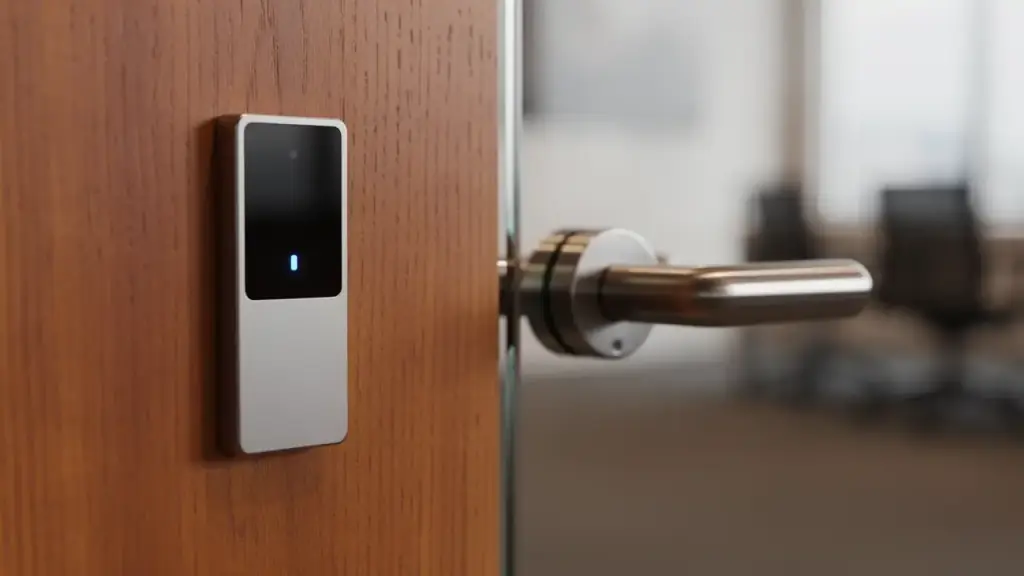
A multifamily building's access control system gets judged differently than an office's. An employee will tolerate a badge that occasionally fails, because there is a front desk and a workday to sort it out. A resident locked out of their own building at eleven at night with a dead phone battery is a different problem, and it is the property manager who takes the call. Multifamily access control has to work for people who did not choose the system, who are not trained on it, and who expect it to behave like a key that never fails.
Credentials people will actually carry
Access control platforms can issue proximity cards, smart cards, mobile credentials and biometric readers, each with master, manager and user access levels for staff and residents. The right mix depends on the building. Mobile credentials, a resident's phone acting as their key, are convenient because almost nobody forgets their phone, but they need a fallback for the moment a phone is dead, lost or being replaced. A physical card or fob as backup, not as the primary credential, tends to be what actually holds up in practice. Protection Technologies was the installation partner of record for the first building wide deployment of Marks USA ArchiTech Networx locks paired with Latch, at Meridia Village Commons in South Orange, a 106 unit new construction project, which is the scale where credential choices stop being an abstract decision and start being something 106 households live with every day.
What changes at the lobby
Visitor management is where multifamily access control earns its keep or fails visibly. A lobby kiosk that handles check in with photo capture, badge printing, host notification and automatic credential expiration means a delivery driver or a guest does not need a resident to walk down and let them in, and it means a guest credential does not quietly stay active for weeks after the visit ends. Without that expiration built in, temporary access has a way of becoming permanent access nobody remembers granting.
What changes at the door
Moving from keys to electronic credentials means the door hardware itself, electric strikes, magnetic locks and electrified hardware, has to be coordinated with the building's architectural door schedule from the start, not retrofitted after the fact. A door rated for a mechanical lock is not automatically ready for an electric strike or maglock without checking fire rating, egress requirements and the hardware schedule the architect already produced. This is design stage coordination, not something to work out once the doors are already hung.
Staff access is a different problem than resident access
Residents need a credential that works reliably at their own doors. Staff need something else, master, manager and user access levels that reflect who should be able to open a mechanical room versus a leasing office versus every door in the building. A maintenance technician's credential should open what maintenance needs to open and nothing more, and that level of control only exists if the platform supports it from the start rather than everyone sharing one master fob because setting up tiers felt like extra work during commissioning. On larger portfolios this is also where a cloud managed, multi site platform earns its keep, letting one property management team see and manage credentials across several buildings from a single system instead of a separate login for each address.
What the property manager gets that a key never provided
- Real time access logs, showing exactly who entered which door and when, rather than a mechanical key with no record at all.
- Automated reporting for the building's own compliance needs, generated from the same platform rather than assembled by hand.
- HR style integration for onboarding and offboarding staff credentials, so a departing employee's access ends the day they leave, not whenever someone remembers to collect a key.
- A single platform managing everything from single door readers to enterprise deployments across thousands of doors and multiple sites, so a building's system can grow without being replaced.
None of this works if the credential itself is the wrong choice for how residents actually live in the building. A system with impressive reporting and a credential residents find annoying to use gets defeated the same way every inconvenient security measure gets defeated, propped doors, shared fobs, workarounds that erase the audit trail the system was installed to provide. The credential decision has to come first, and the reporting and integration follow from a system people actually use the way it was designed.
Protection Technologies, LLC. — (201) 891-8201
Call (201) 891-8201More articles
Why Splitting Low Voltage Across Six Subcontractors Costs More Than It Saves
The lowest bid on six separate contracts almost never adds up to the lowest cost of the finished system.
What "Tested and Certified" Actually Means for Structured Cabling
Tested and certified is not a marketing phrase. It is a specific set of standards, tests and documents you are entitled to see.